Overview
A medical gas pipeline system (MGPS) delivers oxygen, nitrous oxide, medical air, vacuum and other gases from a central source to outlets at the bedside, in operation theatres, ICUs and wards. Because patients depend on it, the system has to be designed, installed and tested with more care than any other building service. We take up MGPS work for hospitals and nursing homes, usually together with the OT and ICU air conditioning.
What an MGPS includes
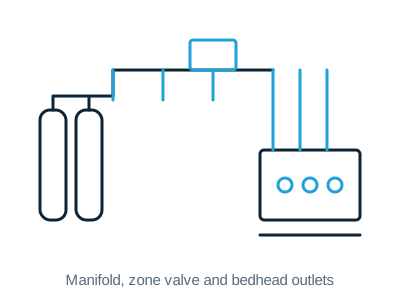
- Source equipment: oxygen and nitrous oxide cylinder manifolds, liquid oxygen tank connection or oxygen concentrator plant, medical air compressor plant and vacuum pump plant
- Medical grade copper pipelines, cleaned and capped, with brazed joints made under nitrogen purge
- Zone valve boxes for isolating each area in an emergency
- Area alarm panels and a master alarm for low and high pressure
- Gas specific outlets at bedheads, OT pendants and ICU bed panels, so a connector for one gas cannot fit another
Design and installation
The pipe sizes and source capacity depend on the number and type of outlets, how many are used at the same time and the flow each department needs. The layout follows recognised medical gas standards such as ISO 7396-1 and the hospital accreditation requirements the client is working towards. Pipe routing is planned with the HVAC, electrical and fire services so shafts and ceilings are not overloaded.
Testing before use
Before handover every pipeline is pressure tested, checked for cross connection between gases, purged and tested for gas identity and purity at each outlet, and alarms are checked for correct operation. These records are part of the handover file.
Maintenance
Manifolds, compressors, vacuum pumps, alarms and outlets need routine checks so that supply changeover, pressures and alarms keep working. We provide scheduled maintenance for systems we install.
Where it is used
Hospitals, nursing homes, operation theatres, ICUs, NICUs, emergency departments, dental and day care centres.
What our scope includes
- Oxygen and nitrous oxide manifold systems
- Medical air and vacuum plants
- Medical grade copper pipelines brazed under nitrogen
- Zone valve boxes and alarm panels
- Gas specific outlets, OT pendants and bedhead panels
- Pressure, cross connection and purity testing at handover
- Coordination with OT and ICU HVAC
Typical technical data
| Gases | Oxygen, nitrous oxide, medical air, vacuum, as required |
|---|---|
| Pipe | Degreased medical grade copper with brazed joints |
| Safety | Zone valves, area and master alarms |
| Outlets | Gas specific, non-interchangeable |
| Reference | ISO 7396-1 and hospital accreditation requirements |
Figures are typical ranges for equipment we supply. Final selection depends on the heat load calculation and the manufacturer's data for the chosen model.
How we execute it
Survey and heat load
Site measurements and a room-wise load calculation.
Selection and BOQ
Equipment choice, layouts and itemised bill of quantities.
Installation
Equipment, piping, ducting, drains, electrical and controls.
Testing
Pressure test, vacuum, air balancing and performance readings.
Handover
Commissioning report, as-built drawings and operator training.
Maintenance
AMC with scheduled visits and breakdown support.
Frequently asked questions
What is an MGPS?
A medical gas pipeline system supplies oxygen, nitrous oxide, medical air and vacuum through copper pipelines from a central source to outlets at beds, operation theatres and ICUs, with valves and alarms for safety.
Why must medical gas outlets be gas specific?
So that a device meant for one gas cannot be connected to another. Each gas has its own connector shape and colour coding, which prevents a dangerous mix-up at the bedside.
What testing is done before an MGPS is used?
Pressure tests on the pipelines, cross connection tests between gases, purging, and gas identity and purity checks at every outlet, along with alarm tests. The results are recorded before the hospital starts using the system.
Can you do MGPS and OT air conditioning together?
Yes. Doing both together makes it easier to plan OT pendants, ceiling space, shafts and the sequence of work in a running hospital.